Where the World’s Largest Rough Diamonds Were Found
As Marilyn Monroe famously sang in Gentlemen Prefer Blondes, “diamonds are a girl’s best friend.” But before they sparkle in display cases, the world’s largest diamonds begin as raw, uncut giants pulled from deep within the Earth. These raw stones, often weighing hundreds or even thousands of carats, have fascinated treasure hunters, geologists, and gem lovers alike for millennia.

Diamonds are formed deep within the Earth’s mantle under extreme heat and pressure, crystallizing from pure carbon over billions of years. These conditions occur more than 90 miles beneath the surface, where temperatures can exceed 2,000 Fahrenheit. Volcanic eruptions occasionally carry these crystals upward, embedding them in a type of volcanic rock called kimberlite. Most gem-quality diamonds formed in the Earth are found in kimberlite, while carbonado diamonds are often delivered from space by meteorites.
Although most diamonds are small, rare geological conditions can create massive crystals, including some of the largest rough diamonds ever found, which we’ll discuss in this article.
View Largest Rough Diamonds in the World in a full screen map
Click on any marker on the map to see more information about the diamond, including its name (if it has one!), uncut and cut carats, where it was mined, a description of the gem, and where it can currently be found.
Sergio: The Largest Rough Diamond Discovered
Leading the list of giant diamond finds is the Sergio, also known as the Carbonado do Sérgio. Unearthed above ground in 1895 near Lençóis in Bahia, Brazil, by Sérgio Borges de Carvalho, the Sergio weighs in at an astounding 3,167 carats. Unlike traditional clear diamonds, it’s a black diamond, also known as carbonado. Fascinatingly, the Sergio may not be entirely of this world. Like other carbonados, it’s believed to be of meteoric origin, either forming in space, or from the impact of a meteor on Earth.
Even though black diamonds lack the classic sparkle of their colorless counterparts, they’re exceptionally durable and are often prized for industrial uses rather than jewelry, which is exactly what happened with the Sergio diamond.
Interactive Maps Made Easy
Sign Up Now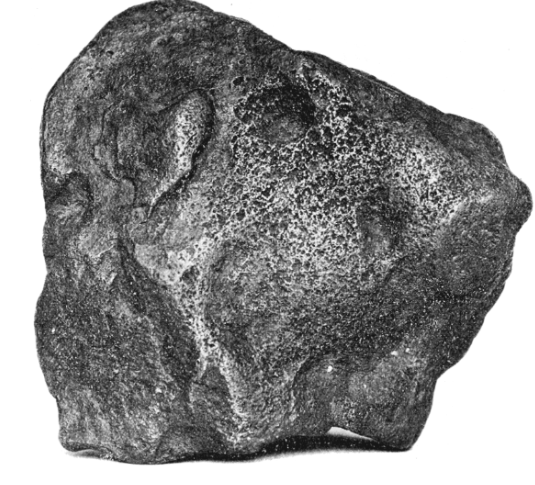
Initially sold for $16,000 and later for $25,000 to Joalheria Kahn and Co., the Sergio eventually reached G. Kahn in Paris, who sold it to I. K. Gulland of London in September 1895 for £6,400. It was then broken up into small 3 to 6-carat pieces to be used in industrial diamond drills.
The Cullinan Diamond
After the Sergio, the next largest rough diamond discovered is known as the Cullinan Diamond, discovered at the Premier No.2 mine in Cullinan, South Africa, on January 26th, 1905. The Cullinan Diamond is the largest gem-quality rough diamond ever found, weighing 3,106 carats. and was named after Thomas Cullinan, the owner of the mine. In April 1905, it was put on sale in London. However, despite a large amount of interest, it sat unsold after two years. In 1907, the Transvaal Colony government bought the Cullinan and Prime Minister Louis Botha presented it to Edward VII of England. It was then cut by Joseph Asscher & Co. in Amsterdam into smaller, but equally impressive diamonds.
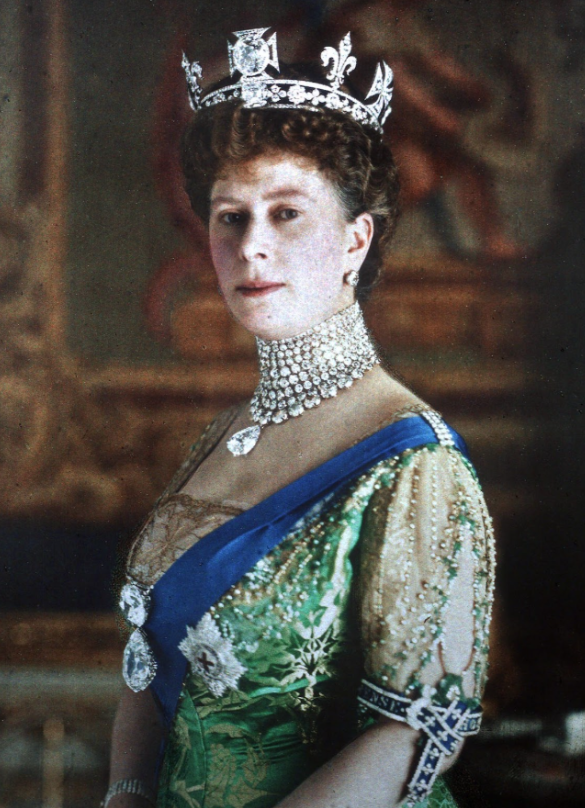
After the Cullinan Diamond was cut, it produced several notable stones. The largest is Cullinan I, also known as the Great Star of Africa. Weighing 530.4 carats, Cullinan I remains the largest clear-cut diamond in the world. It’s set in the Sovereign’s Sceptre with Cross, which is part of the British Crown Jewels. The second-largest stone, Cullinan II, known as the Second Star of Africa, weighs 317.4 carats and is mounted in the Imperial State Crown. Seven additional stones, totaling 208.29 carats, were inherited by Queen Elizabeth II in 1953 after being passed down from her grandmother, Queen Mary, and remained part of her private collection.
Where Were Some Other Diamonds Found?
Although the Sergio and Cullinan diamonds are the largest black and colorless diamonds on record, they’re far from the only sizable finds. Our map showcases 45 of the largest rough diamonds discovered from across the globe, grouped by country of origin:
- South Africa (15)
- India (11)
- Brazil (5)
- Lesotho (3)
- Russia (3)
- Angola (2)
- Democratic Republic of Congo (2)
- Sierra Leone (2)
Rounding out the list are Botswana and The United States, each with one diamond discovery.
Create Your Own Map
Do you have your own data sitting in a spreadsheet waiting to be talked about? It probably won’t sparkle quite like diamonds, but even if it’s customer addresses, business locations, or a list of deliveries, maps can help tell the story of that data.
BatchGeo is your fastest way to make a custom map. If you’re not sure what data to try it with first, there’s even sample data to help you get started. Try it today for free!