Mapping the FIFA World Cup: Every Host City in History
The FIFA World Cup has been played across six continents, through 23 tournaments, in cities ranging from Montevideo to Yokohama. Since Uruguay hosted the first edition in 1930, the tournament has grown from a three-stadium event to a 104-match spectacle spread across three countries. The 2026 tournament, hosted by the United States, Canada, and Mexico, will be the largest in World Cup history and adds 16 more cities to a map that now spans nearly a century of World Cup history.
View full screen map
The map includes every host city from 1930 through 2026. Filter by continent, final host, or number of tournaments to explore the data. If you’re looking for more World Cup history, check out our 2018 article on winners and runners up.
Where the World Cup Has Been
The World Cup began in South America and spent its early decades alternating between Europe and the Americas. Uruguay, Brazil, Chile, and Argentina each hosted tournaments before the 1966 edition in England became the first World Cup held on British soil. Sweden and Switzerland hosted in the 1950s, expanding the tournament’s European footprint, while Italy hosted twice, in 1934 and 1990, and Germany did the same in 1974 and 2006.
The tournament’s global expansion accelerated in the 1990s. The United States hosted in 1994, bringing the World Cup to North America for the first time since Mexico’s second stint in 1986. Japan and South Korea co-hosted in 2002, marking the first time the tournament had been held in Asia. South Africa became the first African host country in 2010, and Qatar hosted the first Middle Eastern edition in 2022. The 2026 tournament across the United States, Canada, and Mexico adds the first Canadian host cities to the map.
Cities That Keep Coming Back
No city has welcomed the World Cup more often than Mexico City. The Estadio Azteca has hosted matches in 1970, 1986, and 2026, making it the only stadium in history to stage three separate World Cup tournaments. It has also hosted two finals, a record shared only with Rio de Janeiro’s Maracanã.
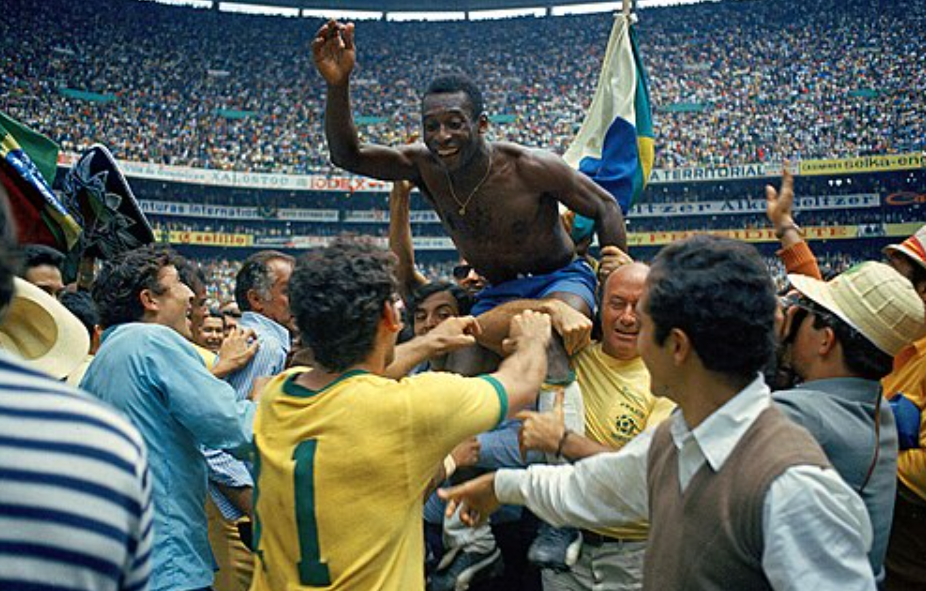
[Source: Wikipedia and The Associated Press. Pelé after the 1970 World Cup held at the Estadio Azteca.]
The Maracanã’s World Cup story spans more than six decades. In 1950, it hosted the tournament’s most shocking result when Uruguay upset Brazil in front of a crowd estimated at nearly 200,000 people in what Brazilians still refer to as the Maracanazo. The same stadium hosted the 2014 final, where Germany defeated Argentina to claim their fourth title. Few venues in any sport carry that kind of history.
Interactive Maps Made Easy
Sign Up NowGermany’s host cities also appear twice on the map, with nine cities from the 1974 tournament and twelve from 2006 sharing significant overlap. Berlin, Munich, Hamburg, and Dortmund all hosted matches in both editions, four decades apart.
Moments That Defined the Map
Some cities on this map are remembered not just for hosting the World Cup, but for specific moments that became part of the tournament’s permanent history.
Bern, Switzerland, hosted the 1954 final at the Wankdorf Stadium, where West Germany’s 3-2 victory over Hungary became known as the Miracle of Bern. Hungary had been unbeaten for four years and were overwhelming favorites. The result remains one of the greatest upsets in tournament history.
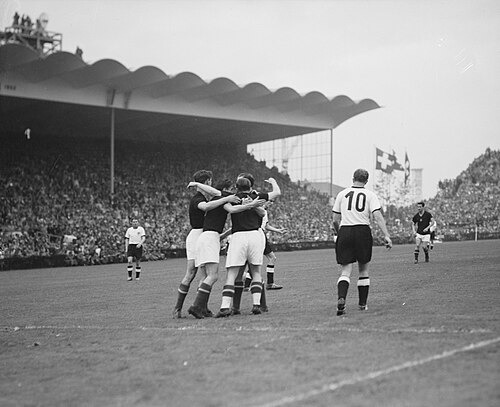
[The Hungarians celebrating their first goal. Source: Wikipedia]
Mexico City’s Estadio Azteca hosted what many consider the most memorable match ever played, when Argentina met England in the 1986 quarterfinal. Diego Maradona scored twice in four minutes—first with the infamous Hand of God goal, then with a solo run from his own half that was later voted the Goal of the Century.
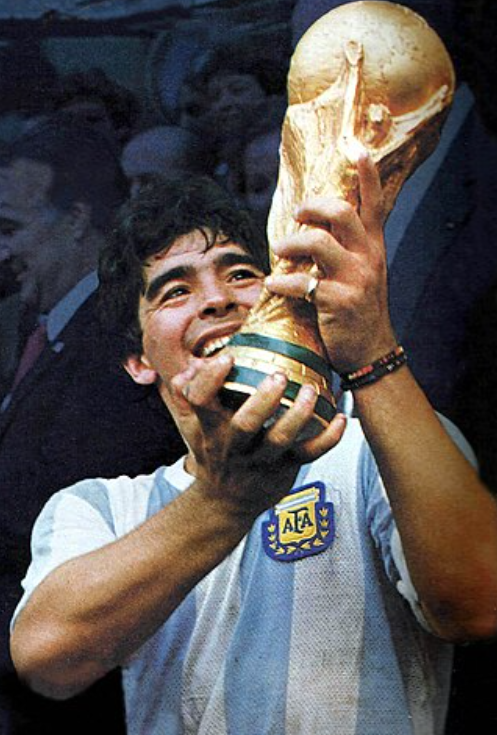
The most recent addition to that list came in Lusail, Qatar, where the 2022 final between Argentina and France produced what many have called the greatest World Cup final ever played. Kylian Mbappé scored a hat trick in the second half and extra time to pull France level twice, before Argentina ultimately won on penalties to claim their third title.
Create Your Own Map
Location data tells a different story when you can see it geographically. Whether you’re mapping historical data, customer locations, or anything in between, BatchGeo makes it simple to turn any spreadsheet into an interactive map. Give it a try and see what your data looks like on a map.


.jpg)