250 Years Later: Mapping Every Battle of the Revolutionary War
Two hundred and fifty years ago, a ragged collection of colonial militias and Continental soldiers took on the most powerful military force in the world. The conflict that followed lasted eight years and stretched from the hills of Massachusetts to the swamps of South Carolina, from the frontier settlements of Kentucky to the Caribbean coast.
The map below plots every recorded engagement of the war, from the opening shots at Lexington and Concord in April 1775 to the final skirmishes of 1782. Filter the map by outcome, theater, or year to explore how the war shifted across geography and time.
View full screen map
The War at a Glance
The map includes 160 recorded engagements fought between 1774 and 1783, spanning 13 present-day US states, six Canadian provinces and territories, and a dozen Caribbean and Central American locations. American forces won 61 battles, British forces won 72, and the remaining engagements ended in draws, allied victories, or actions with no clear outcome. The South saw the most action with 53 battles, followed by New York and New Jersey with 42.
The balance of victories and losses shows that winning the most battles isn’t always what wins a war.
Four Battles That Defined the War
1775: Lexington and Concord, the Shot Heard Round the World
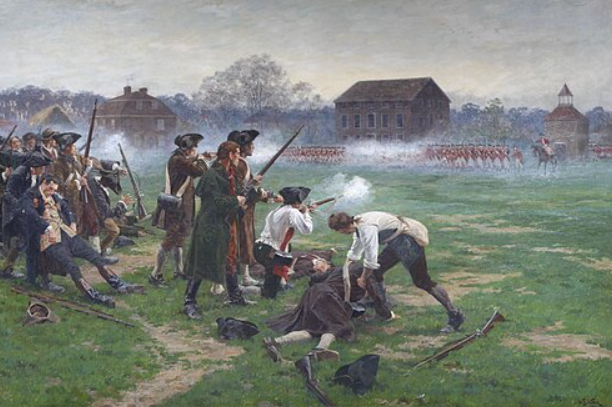
On the morning of April 19, 1775, British regulars marched from Boston toward Concord to seize colonial weapons stores. They met militia on the Lexington town green before dawn. Nobody knows who fired first. While it wasn’t the first skirmish, Lexington and Concord is widely recognized as the true opening of the war, the moment armed resistance became revolution. By the time the British made it back to Boston that evening, they had suffered 273 casualties, nearly three times the American losses. Within weeks, thousands of militia had converged on Boston to begin the siege that would force the British evacuation of the city the following spring.
1775: Battle of Bunker Hill
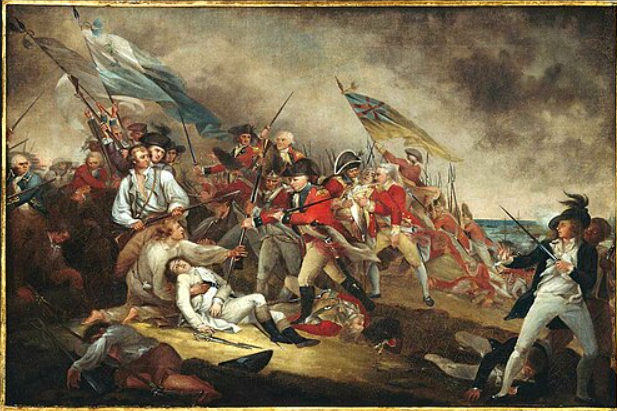
Two months after Lexington and Concord, the British launched a frontal assault on American fortifications on the Charlestown peninsula overlooking Boston. They took the hill, but at enormous cost. Nearly half of the roughly 2,200 British soldiers who attacked became casualties, with 226 killed and 828 wounded. The Americans retreated after running out of ammunition, but the battle demonstrated that colonial forces could stand and fight against professional soldiers. The heavy British losses came as a shock, and while Bunker Hill was technically a British victory, in practical terms it was something closer to a warning.
Interactive Maps Made Easy
Sign Up Now1777: Battles of Saratoga
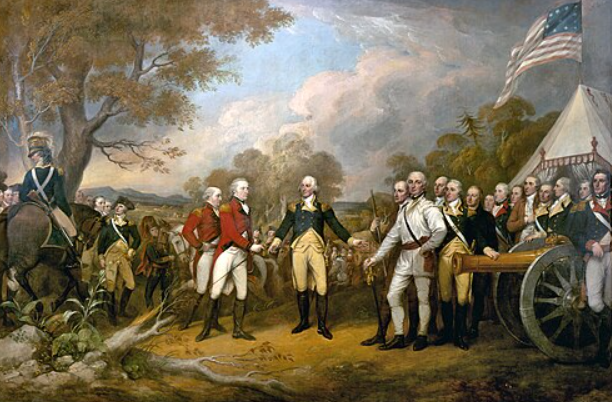
By the autumn of 1777, the British had a plan to split the colonies in two. General Burgoyne would march south from Canada through the Hudson Valley while forces from New York City and Lake Ontario converged on Albany, severing New England from the rest of the rebellion. Unfortunately, the supporting forces never arrived. Howe took his army to Philadelphia instead, and St. Leger turned back from the west. Burgoyne pushed on alone and found himself surrounded by an American force that grew larger by the day. He fought two engagements on the same ground in September and October, losing the second decisively. On October 17, he surrendered his army. France entered the war as a formal ally within months.
1781: Siege of Yorktown
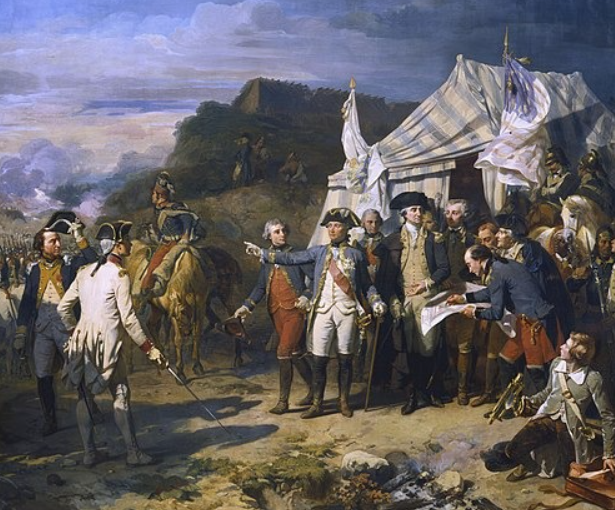
Six years after the first shots at Lexington, the war came down to a peninsula in Virginia. Cornwallis had moved his army to Yorktown expecting reinforcement by sea. Instead, the French fleet defeated the British navy at the Battle of the Chesapeake in September 1781, cutting off any hope of rescue. Washington and French General Rochambeau marched their combined forces south from New York and by mid-October, Cornwallis had no options.
On October 19, 1781, he surrendered more than 8,000 troops. According to tradition, the band played a tune called The World Turned Upside Down. Fighting continued in smaller engagements for another year, but the siege of Yorktown effectively ended the American Revolutionary War.
Map Your Own Revolution
The American Revolution was won not in a single decisive moment but through persistence across hundreds of engagements over eight years and thousands of miles. If your business has its own territory to conquer, whether that means tracking customer locations, planning sales routes, or visualizing where your next opportunity lies, BatchGeo makes it simple to put your data on a map. No GIS degree required.
Give BatchGeo a try and see where your data takes you.